(Estimated reading time 5 min.)
If you have a limited frame of reference for humanitarian aid, there are a few points necessary for a basic understanding of the objectives and efforts for coordination. However, be prepared for acronyms – lots of acronyms.
First, the general objective of humanitarian aid is to save lives, alleviate suffering, and maintain human dignity. Humanitarian aid is therefore usually provided to cover natural disasters and man-made disasters, whereas the timeframe for humanitarian efforts could entail short to long-term support. Second, countries (also interchangeably referred to as states) may provide bilateral humanitarian support to other countries and/or through United Nation’s organizations or funds, including for example the UN Children’s Fund (UNICEF) or the World Food Programme (WFP). In 2006, the UN Office for the Coordination of Humanitarian Affairs (OCHA) also launched the Central Emergency Response Fund (CERF) to complement funding mechanisms and divert pooled funds to the issues where they are most needed. Lastly, all countries naturally provide humanitarian aid in their own way, whether it is in terms of financial, technical, or operational support.
Bearing this information in mind, you might ask yourself, “why the focus on China?”. This post explores this question and hopefully provides some essential insights to draw from if you ever find yourself in a bar discussing humanitarian aid. So, cheers that highly unlikely scenario!
Now considering several Western states are among the largest providers of general humanitarian aid, this raises questions on the role played by other states. For example, in the past few years this question has been raised by Germany and other EU member states, which called upon China to provide more humanitarian assistance as deemed well within the state’s economic capacity. Although the per capita income is lower compared to high-income countries, China has developed the second largest economy in the world (in US$). Moreover, China is categorized by the World Bank as an upper-middle income country, making the state a potentially larger contributor in the humanitarian domain; at least compared to the state’s emergency aid efforts to date.
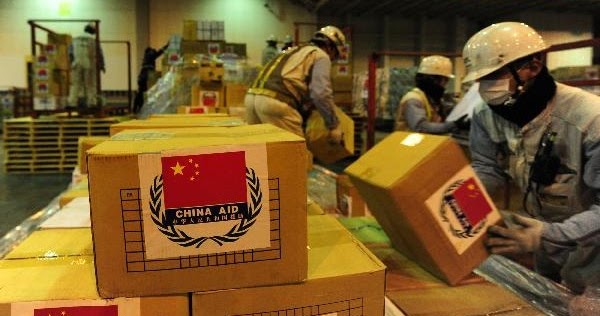
Compared to the typical definition of humanitarian aid used by the Development Assistance Committee (DAC), China defines the terms surrounding humanitarian aid differently. According to official Chinese documents, it is therefore worth noting that in many cases China refers to “emergency humanitarian aid” while interchangeably referring to humanitarian aid as well. For all intents and purposes, emergency aid in this context henceforth refers to China’s short-term humanitarian responses. To add to this ambiguity, some authors from The Diplomat claim that China’s humanitarian efforts have recently shifted between the last State Council white paper in 2014 and the most recent white paper in 2021. In The Diplomat article the authors discuss how the shift occurred from briefly mentioning “emergency humanitarian aid” to an entire chapter dedicated to China’s humanitarian aid efforts in general. This is indeed significant if it signals a genuine shift in China’s focus on emergency aid to broader humanitarian aid in its foreign policy.
Now in terms of humanitarian aid, academics and researchers have produced several discussions on the effectiveness of humanitarian aid and potential motivations of the state’s behavior. However, there has been relatively limited focus on China’s role in providing emergency humanitarian aid. In this regard, there may be two essentials reasons for the limited amount of attention on China’s humanitarian efforts. The first being in part due to the lack of available and transparent data indicating where China is providing humanitarian assistance that is not strictly development related. This is understandable given the obscure nature of Chinese foreign aid, which has been historically difficult to disentangle from the development aid and the state’s humanitarian actions. Second, with the status of a “developing economy”, attention to Chinese humanitarian or emergency aid efforts were perhaps less warranted in the academic domain. However, considering the substantial economic capacity of China, it is worth investigating the practical implications in terms of cooperation with other countries in the UN system and the distribution of emergency aid.
To study Chinese contributions to humanitarian efforts, the purpose of my final thesis was to understand underlying motivations for the provision of humanitarian aid. In similar studies, other authors have examined the United State’s humanitarian efforts in a comparable manner and came to different underlying motivations (c.f. Kevlihan et al., 2014 & Drury et. Al, 2005). While some argued in favor of a “recipient-needs” approach, others argued that interests were driven by political or economic factors. For my thesis in particular, I utilized 140 cases of China’s emergency responses to over 31 countries between 2000 and 2015, providing an extensive range of analysis during a period of China’s rapid growth. Effectively, the analysis pointed to underlying “realist” motivations, defined primarily around statism, the self-help principle, and a symbolic power dynamic. Effectively, this meant that the premise of recipient-need was not the major determining factor for China to provide emergency aid.
Two of the most interesting faucets of the study revealed China’s largest emergency aid recipients and the dominance of bilateral emergency aid, rather than through multilateral institutions and NGOs. And for those somewhat familiar with China, you could probably assume who their largest emergency aid recipients were. That’s right. We’re certainly looking at you North Korea and Myanmar!
Another revealing point was that in most cases, China typically would not provide emergency aid or support to countries which formally recognize Taiwan. Well, that is officially a whole other can of worms in and of itself. For those unfamiliar with this policy, it would suffice to say China is not necessarily on good terms with the remaining handful of countries which formally recognize Taiwan. The one exception to this finding was China’s humanitarian support to Haiti during the 2010 earthquakes.
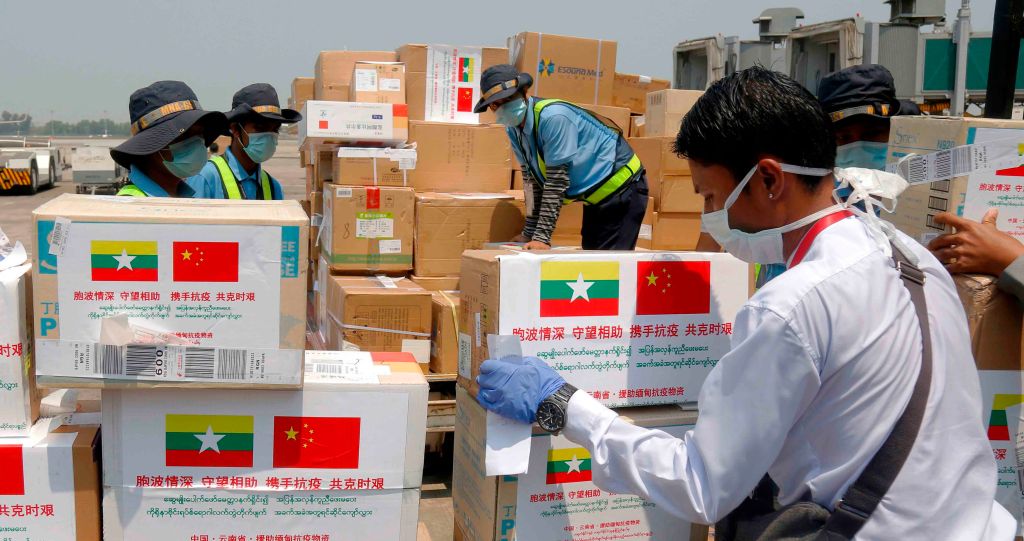
Now let’s return to the opening question and your hypothetical bar situation on why this is important. As previously stated in another humanitarian post, one could argue there is a moral imperative in this domain to alleviate suffering and save lives. At the very least, it is a reason why we might consider what is done with humanitarian policy and funds during critical emergencies. While preparing my thesis, it was my hope that research into humanitarian action would not only consider how China provides emergency aid but then to define concrete proposals for how China could better engage with existing humanitarian agents and programs.
With one step forward in 2018, the state established “China’s International Development Cooperation Agency” (CIDCA) to create more transparency for China’s foreign spending. However, the Agency’s limited clarity on the state’s humanitarian responses, compared to standard development operations, continued to persist. For this reason, the Chinese government should continue to explore ways to work with other humanitarian donors and agencies to gain more experience and better showcase their state’s humanitarian efforts. As a further policy effort, the Chinese government is also encouraged by other states to contribute more to specific UN agencies and programs, such as the WFP and CERF, rather than predominantly through bilateral efforts. Though bilateral responses provided mostly to allies may serve to uphold relations with those states, existing UN agencies and programs are aimed towards offering more effective and rapid global coordination in emergency and humanitarian relief efforts.
While it is understandable that high-income countries continue to remain the biggest suppliers of humanitarian support and funding, it would be great to see emerging donors, such as China, continue to bolster their own efforts in a transparent manner. When it comes to providing rapid humanitarian relief – China’s cooperation and support within the international community could be extremely useful.

 Policy Crossroads